I forgot to take a picture of the coin-op laundry I walked to this morning. It is cute and functional. I liked being in a regular person’s neighborhood, walking past a gas station and an actual grocery store. Last laundry day before we head home.
We sent our luggage ahead after we packed everything up. Amanda reports that this is unique to Japan, at least the level of service provided. So we were free to travel about today unencumbered, using our travel day from Kyoto to Osaka to stop by Nara.
Nara was the capital city of Japan from 710 to 784. Consequently there are many historic sites. We did not get to go to the old capital or palace, but we did walk through Nara Park where “wild” deer walk freely among the throng of tourists.
Little carts are set up that sell a few senbei (deer crackers) for 200 yen (about $1.27). We bought a couple of packs and were immediately swarmed by deer, nipping at our pockets and rubbing up against us. Later we would learn that one can bow before the deer and they will bow back before you give them the cracker. Pretty cool.
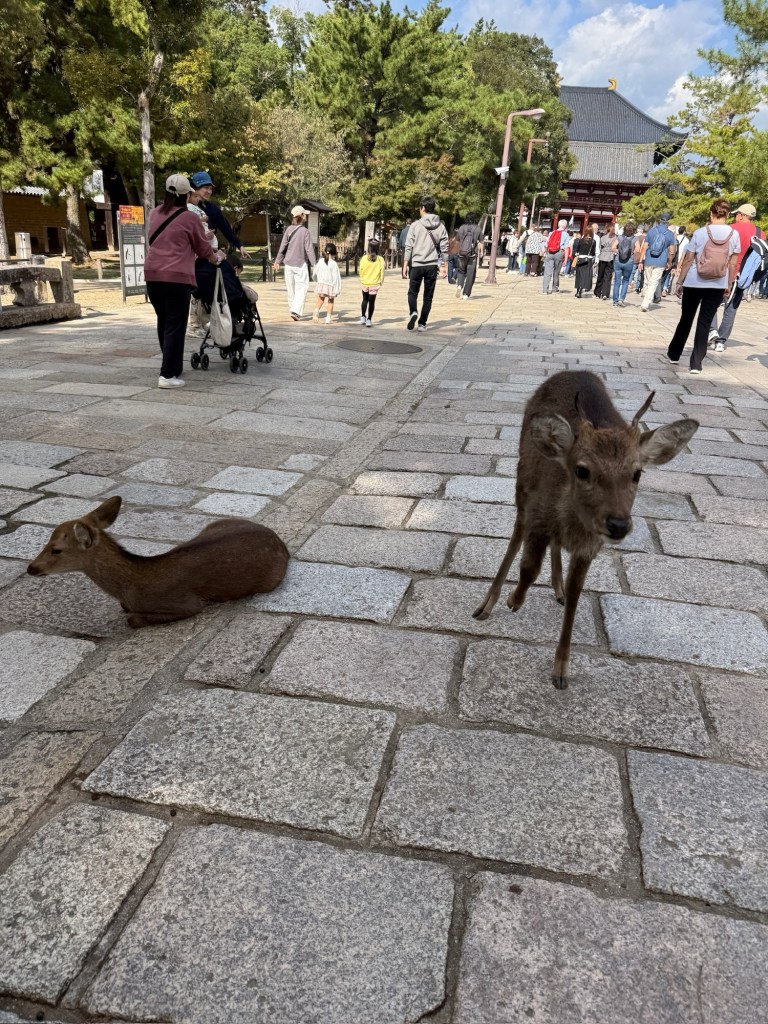
When Nara was founded the god Takemikazuchi (a god of thunder and a sword god) rode in on a white deer to protect the new town. As such, the deer have since been regarded as heavenly animals who protect the city.
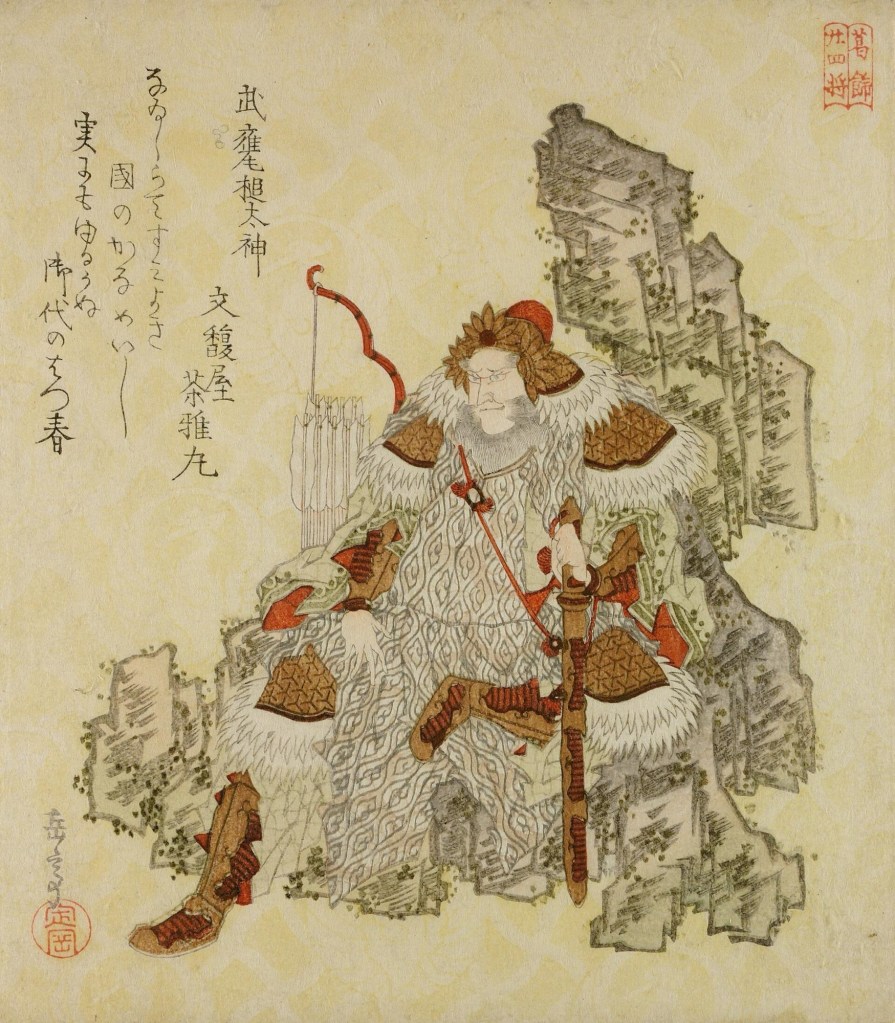
This image of Takemikazuchi is from Wikipedia.
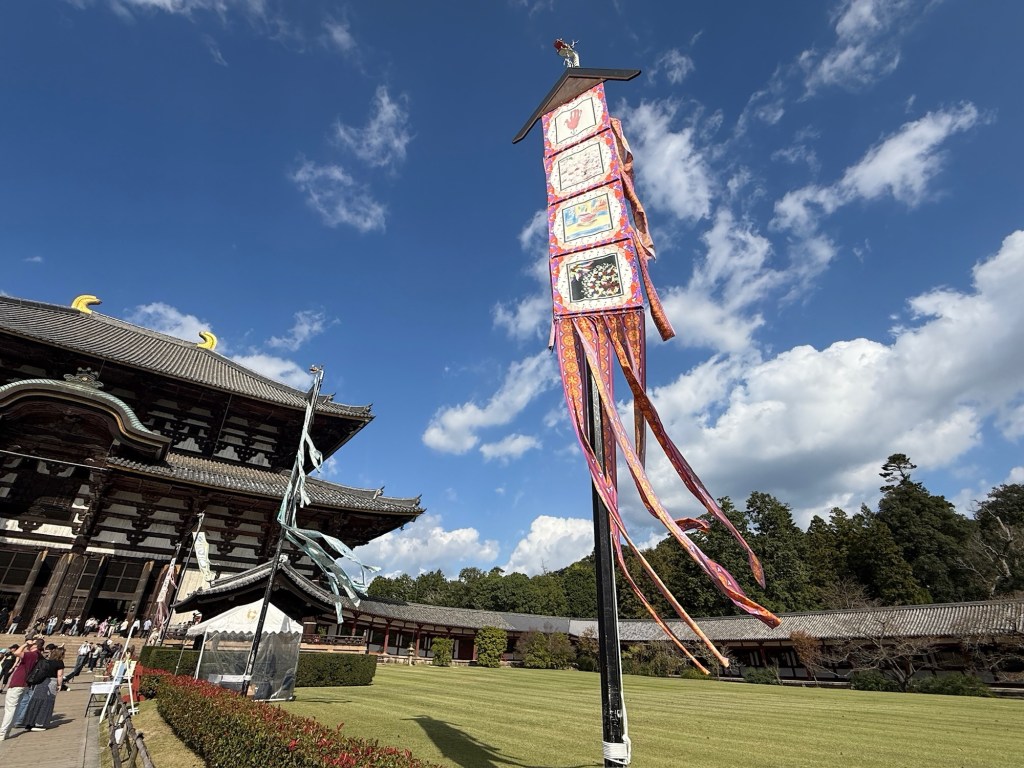
We also walked to the nearby Todai-ji, a Buddhist temple that houses the largest bronze statue of the Buddha Vairocana (Daibutsu in Japanese). The statue is 16 meters (52 feet) tall. Emperor Shomu issued a law stating all should help build temples throughout Japan in 743. This temple was completed in 751 with an eye opening ceremony the next year. The Emperor believed that this piety would help protect Japan.
With seven other sites it is on the UNESCO World Heritage Site as one of the Historic Monuments of Ancient Nara. The structure is massive, one of the largest buildings of the world at the time.
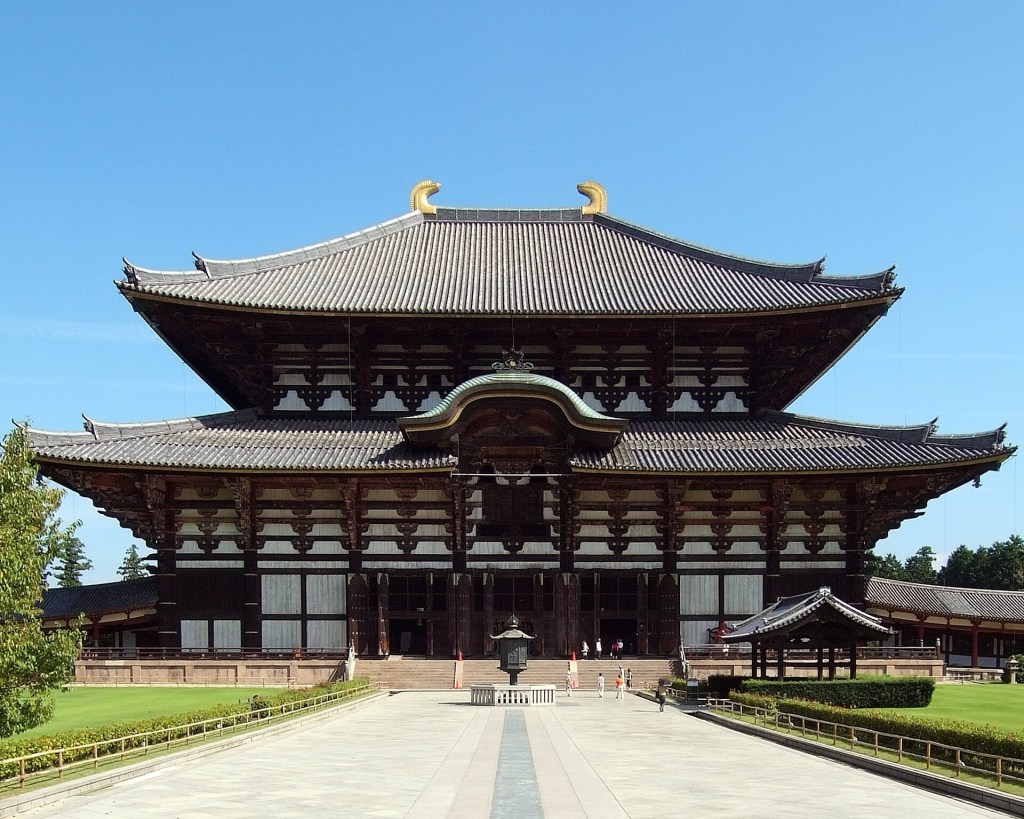
This image is from Wikipedia.
One interesting thing I came across is the reconciliation of Shinto and Buddhism. According to legend, the monk Gyoki went to Ise Grand Shrine to reconcile Shinto with Buddhism. He spent seven days and nights reciting sutras until the oracle declared Vairocana Buddha compatible with worship of the sun goddess Amaterasu. That little fact was pulled directly from Wikipedia, by the way. The tension between Shinto and Buddhism is interesting.
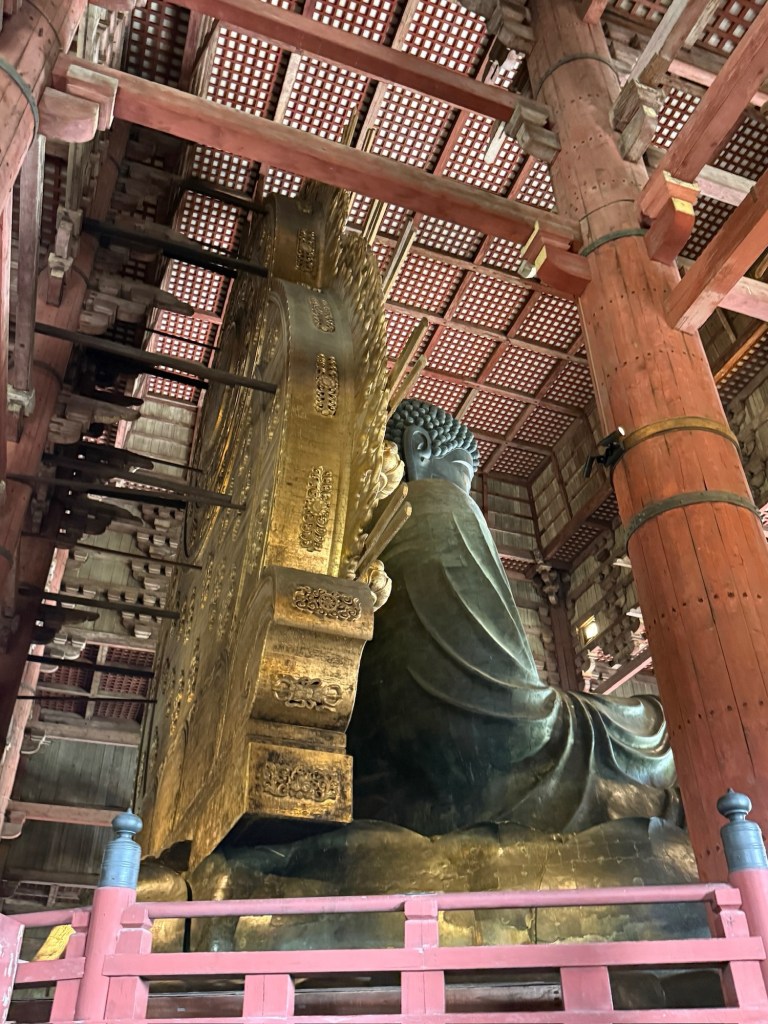
The political history of Buddhism in Japan is fascinating and I will not attempt to relay it here. I have been really expanding my understanding of the practice as the Buddhism I have known is heavily influenced by the Zen traditions, especially American traditions, and American media which includes none of this political understanding. Of course, I will defer to experts on the subject.
The architectural wonder of the space (even if what we are seeing has been rebuilt) is amazing. The grounds are beautiful and a true treasure of Japan.
We had lunch at a halal restaurant in the park. It was good.
We arrived in Osaka after a lengthy ride on the train. There were many people and had to stand quite a bit, so our feet and legs were tired by the time we arrived at our hotel.
It was Saturday night and Halloween, so some things were going on, but we just got settled. We were considering room service when I found a cool restaurant a 15 minute walk away.
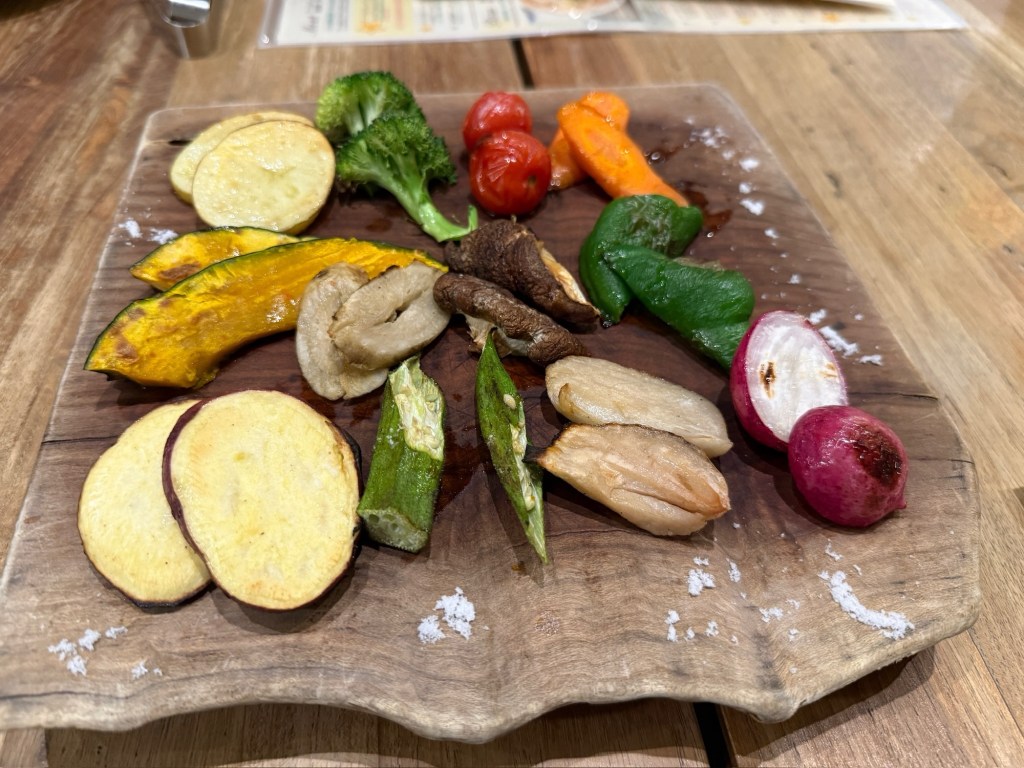
LOVE TABLE Agarato farm to table is the in town expression of Agarato Farm in the mountains of Wakayama. It’s pretty cool.
They are all about sustainability and community. The menu was thoughtfully put together and our food was delicious. We had their pan friend chicken that had a crispy skin and this plate of roasted vegetables that was cooked perfectly.
If you are ever in Osaka, make the effort to find them in the basement of a large shopping center building in downtown. It took us awhile to find them, but we are glad we persevered.
Bookshops, bakeries, and boat rides tomorrow.

