While Japan has had a historically verifiable emperor since the 3rd century, the shogun ruled as head of a military government from 1185 to 1868. The Tokugawa Shogunate also known as the Edo Shogunate was the last to rule Japan from 1603 to 1868.
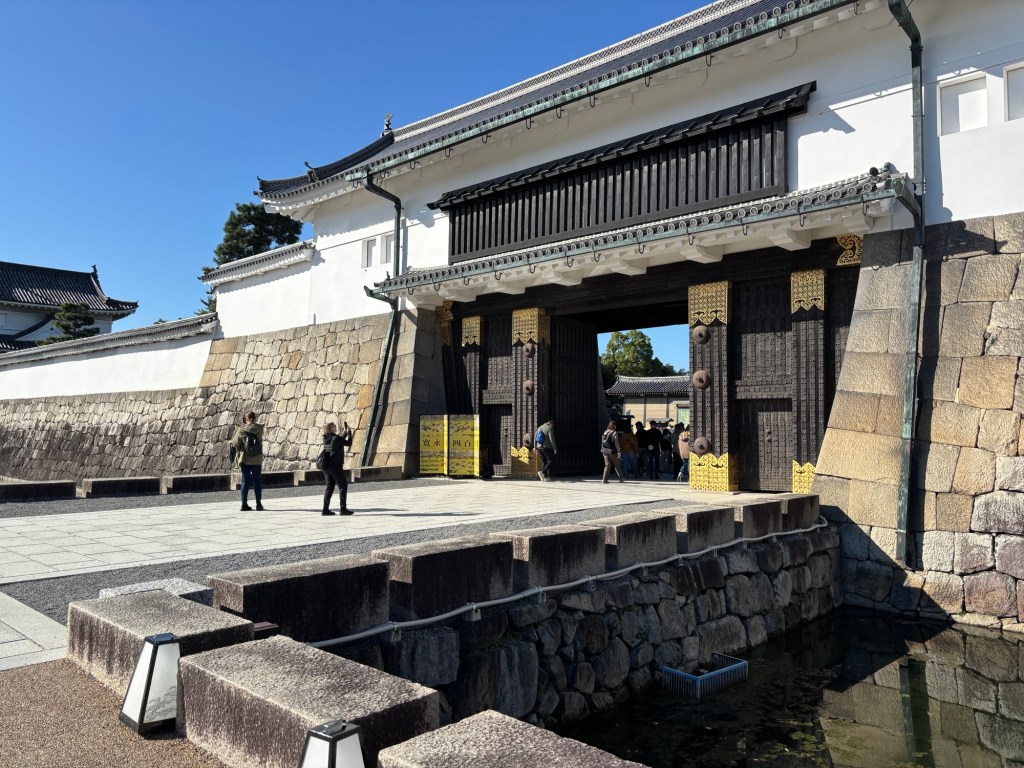
In 1601, founder of the Tokugawa Shogunate Ieyasu Tokugawa ordered the feudal lords of Western Japan to contribute to the construction of Nijo-jo Castle. He began using it in 1603, but his grandson would see its full completion in 1626 as he installed his friends as his closest advisors and established a cruel reign. The Tokugawa Shogunate would rule until the Meiji Restoration in 1868.
Nijo-jo Castle is the site where Ieyasu Tokugawa began his rule and the 260 year reign of the Tokugawa Shogunate. Additionally, the castle is where the shogunate’s power was transferred back to the emperor after several centuries, beginning the Meiji period. It is a powerful place.
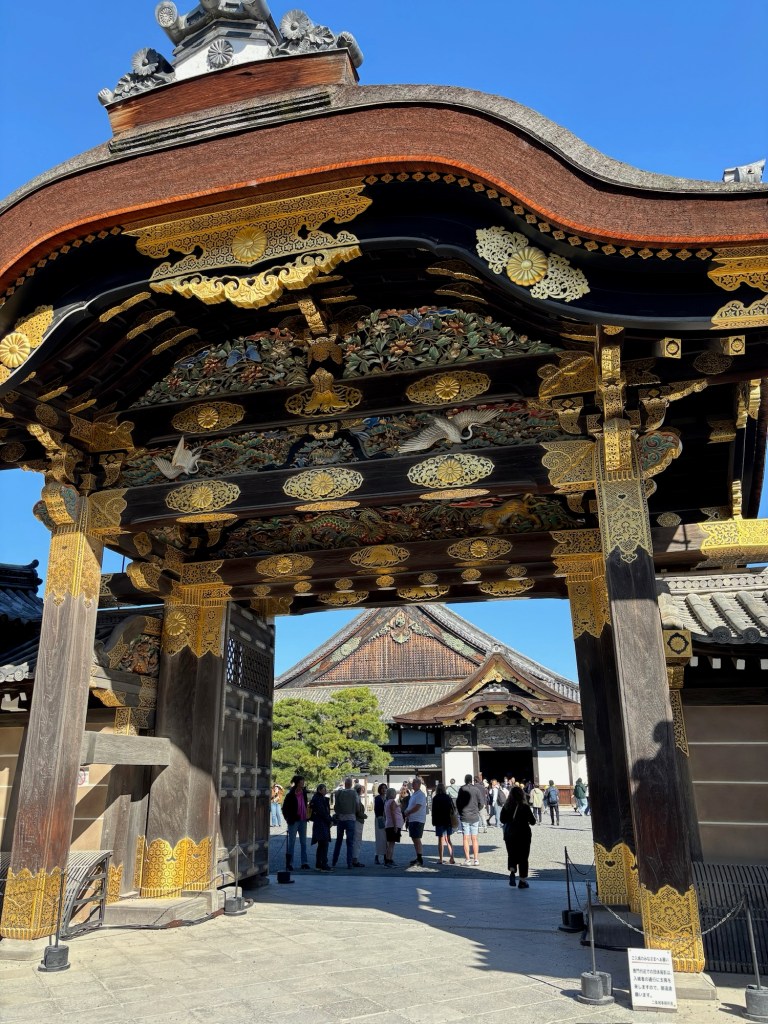
Nijo-jo Castle is one of the highlights of the trip so far. I am reminded of the last trip I took out of the country over 25 years ago. Back in the year 2000 I stared in at the humble room where Martin Luther stayed during an early year of the Protestant Reformation at Veste Coburg in Coburg, Germany and felt the power of seeing the place in person. I experienced that sensation this trip several times but quite profoundly today.
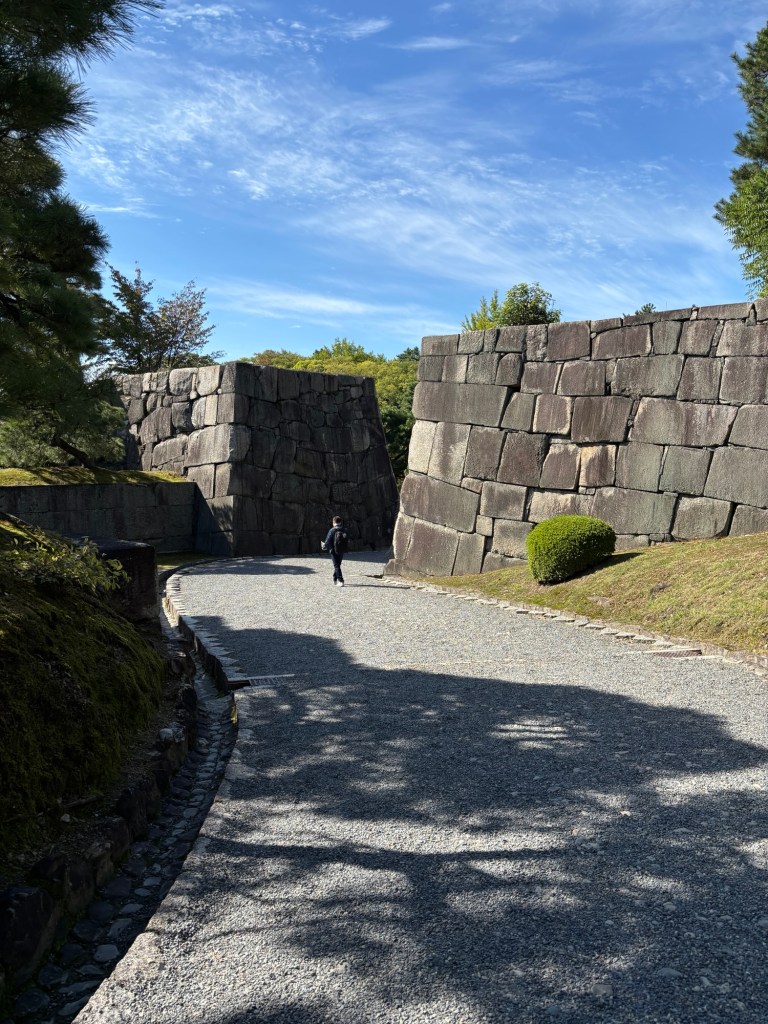
The castle boasts an inner and an outer moat, impenetrable thick walls with huge stones all around, and beautiful grounds. It is confounding to imagine how all this work was completed in the 17th century.
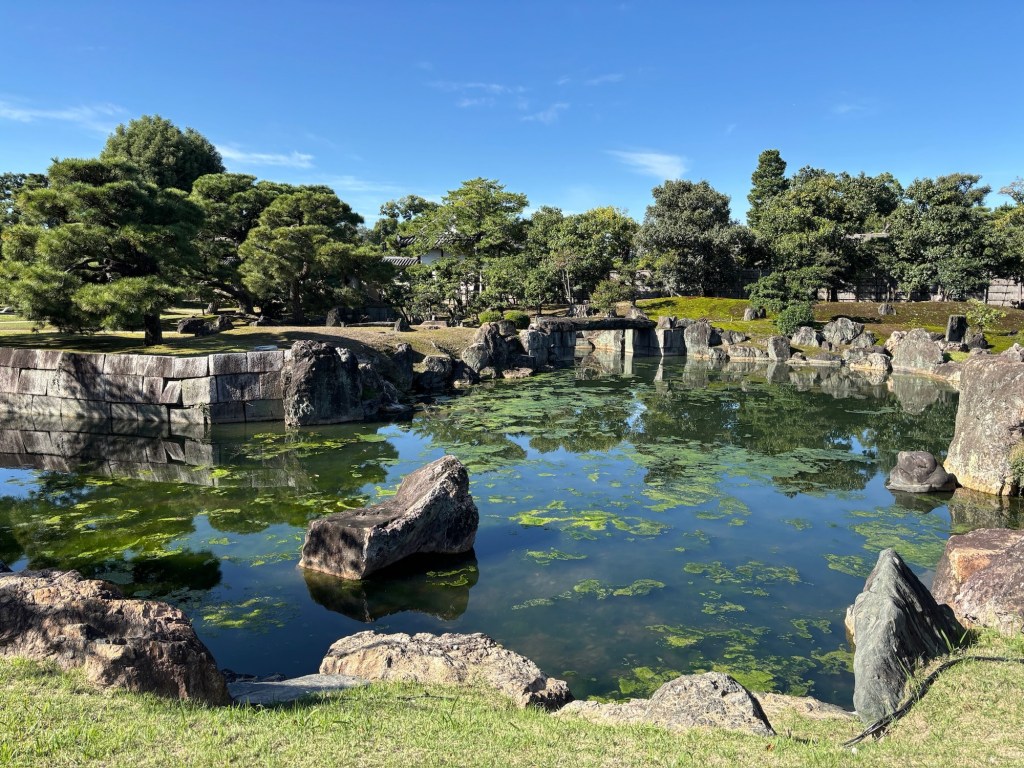
Once removing one’s shoes, the path through the castle itself is smartly laid out with extensive interpretive material at stations throughout the site. The murals in the rooms are stunning, along with the detailed woodwork that boggles the mind. As the wooden floors chirp like birds beneath the flow of visitors’ feet, one can imagine the shogun hosting daimyo (feudal lords) from across the land. The interpretive material explains subtle details like the direction the shogun would be sitting, the significance of the plants represented in the murals, and architectural elements that signify the superiority of the shogun. It was all so fascinating when put into the historical perspective.
One of the (dare I say?) fun elements of the castle are the murals of tigers in one of the rooms. The thing is… the artists who made these amazing murals had never seen a live tiger. They had hides of tigers and descriptions from travelers. So this is what they painted.
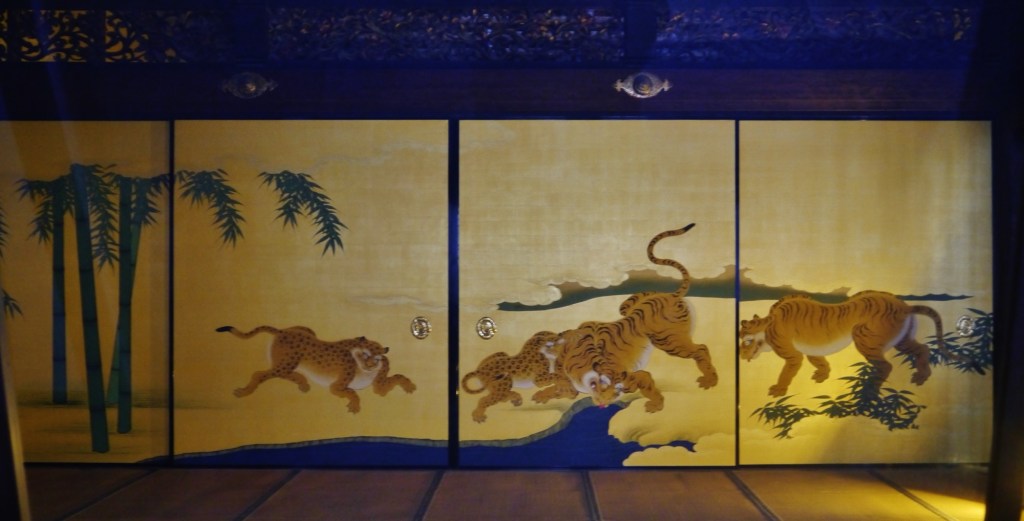
I’d say they are not bad for someone who had never seen a tiger. The image is from Wikipedia; they don’t allow photography in the castle. It just speaks to the value of seeing something for oneself, knowing the thing in person. I wonder how much of my life can I experience without mediation (says the bookseller). Or maybe the media we make is our life…?
This area of Japan was mired in civil wars before the Tokugawa Shogunate, so despite their strong hand, they did bring stability and a kind of peace. The industrialization and other developments of the outside world would change Japan one way or another and a coalition gathered to finally end the Shogun’s rule. The Meiji Restoration was the way that Japan entered the modern world, with an Emperor restored to power after centuries of being sidelined to achieve only 80 years of empire building before the Second World War forced Japan into a constitutional monarchy that would work in the new world order developing postwar.
I know I’m over-simplifying things, but I think I got the basics right.
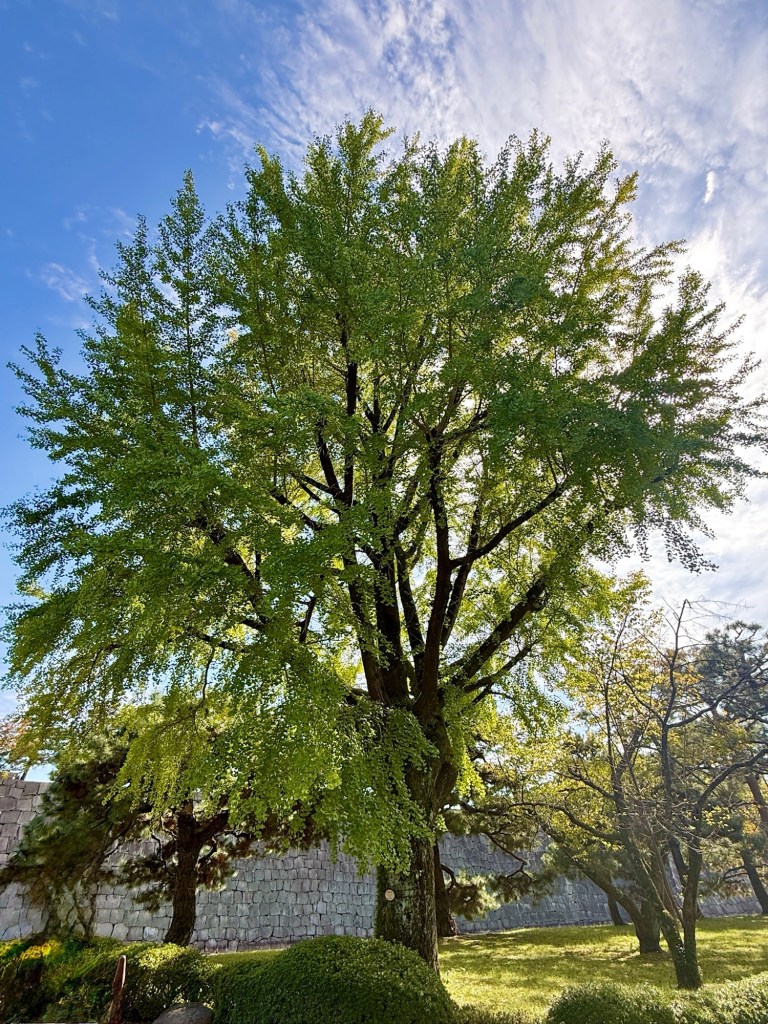
Nijo-jo Castle is a delight. I recommend it if you ever get the chance to visit Kyoto.
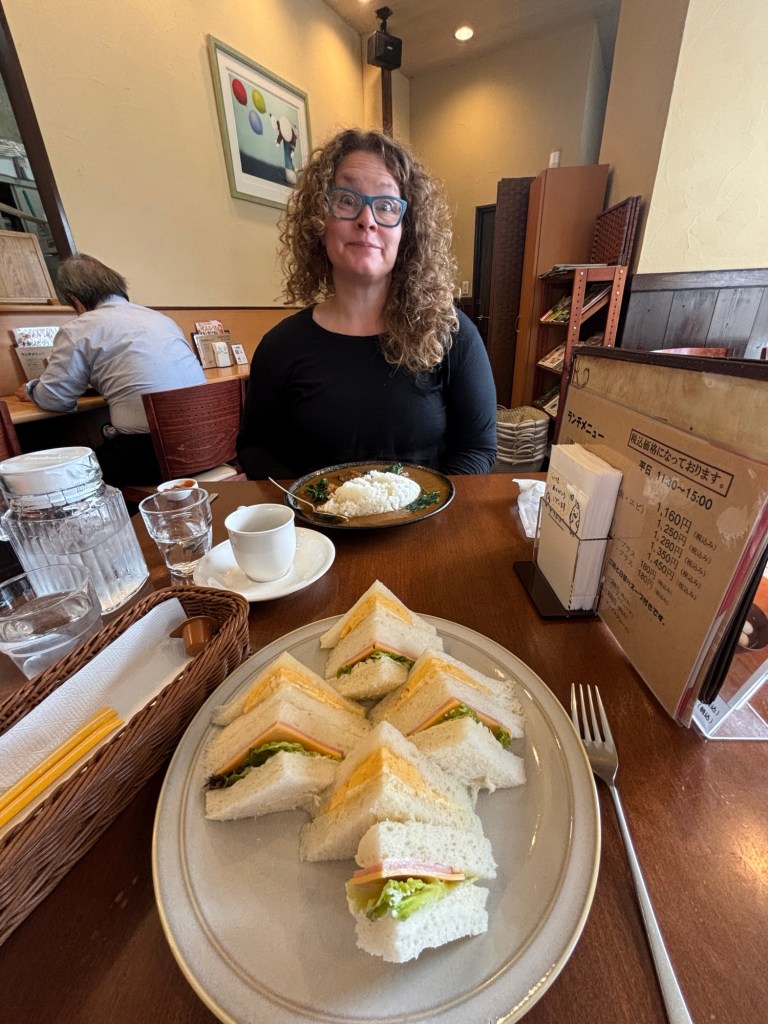
We took the opportunity of a train transfer to try eating at a place known for its curry, which Amanda enjoyed. In this shot I had already taken a bite of my sandwich.
An interesting part of this stop is that it was the first spot where we really needed to use our phone to translate the menu as our server spoke very little English and the menus were exclusively in Japanese. So many places, especially in tourist areas have English menus and the staff are used to dealing with people like us who have nearly no Japanese.
Here’s the advice I would give a young person — learn as many languages as you can. It would be fun to be at least functionally skilled in Japanese while visiting Japan.
We were doing alright so we forged ahead to see the Arashiyama Bamboo Forest. We ended up on a tram rather than a subway. It was crowded and swayed a lot — not the best experience, but I am glad to have traveled for that short distance in a different way.
As the train disgorged both tourist and local resident alike, we found ourselves in one of Kyoto’s most tourist impacted neighborhoods. The path from the tram to the legendary bamboo forest was lined with shops catering to the visitor from abroad, including this taiyaki shop.
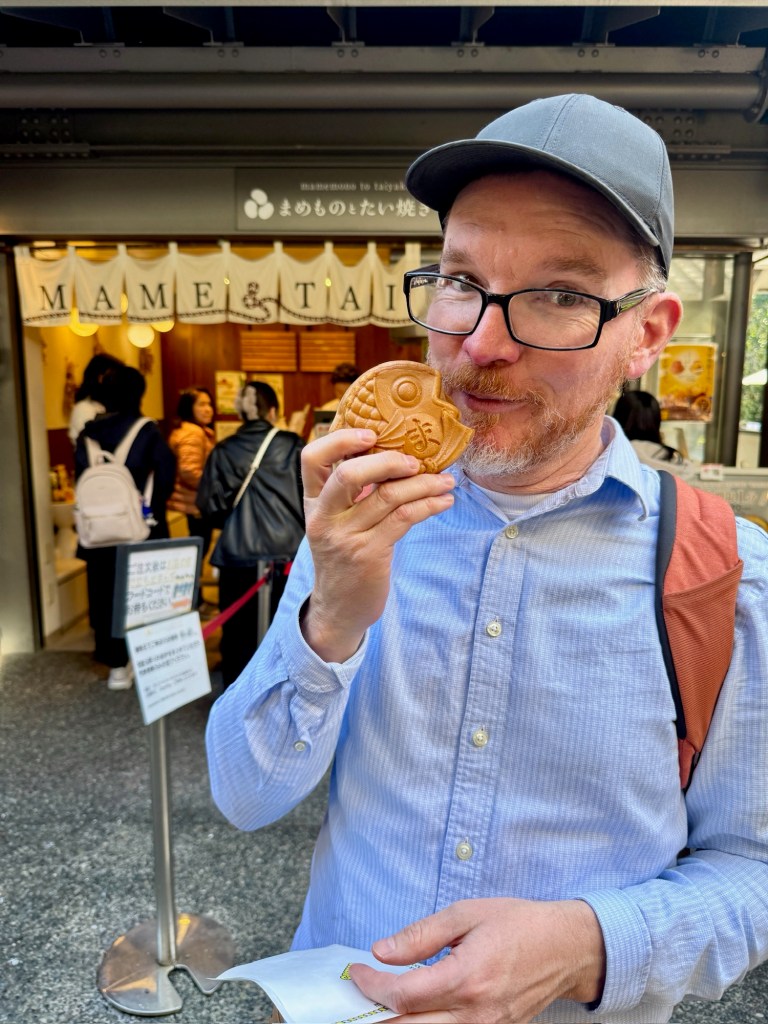
I had few items on my list of must have experiences on this trip, but this was one of them. The taiyaki is like a pancake around a filling, traditionally a bean paste, but sometimes chocolate or custard, like I am enjoying above. They are baked in something like a panini press, flipped halfway through. It was delicious.
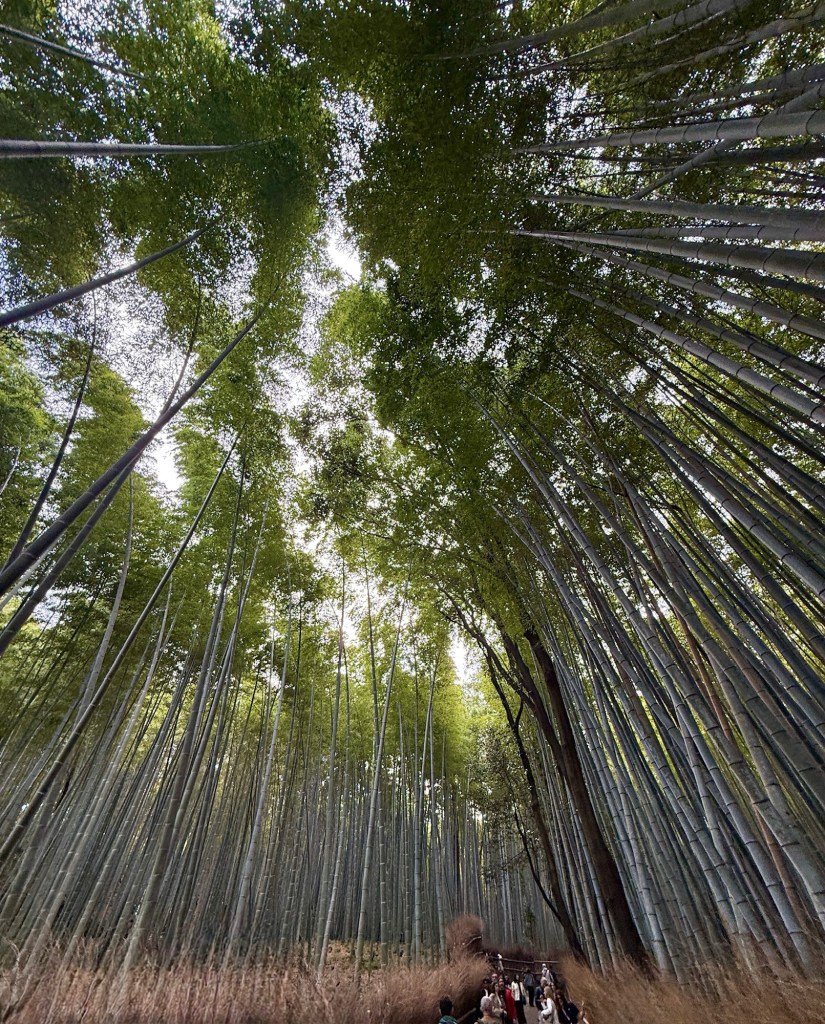
Fueled up and ready to move, we joined the masses of humanity walking up the path through the bamboo forests of Arashiyama. This area is on the western edge of the city and connects to the park and scenic areas to the west. We discovered that there is a scenic train ride one can take out that way. We didn’t take it, but it is undoubtedly beautiful.
As it was, we walked up and back. It was beautiful as one looked up at the towering bamboo, but navigating the numerous tourists was a drag. Amanda got a great picture and I will also note here that most of the good pictures here are hers.
Our nap was late and we weren’t too hungry so we waited too long to go to Tu Casa which we loved our first night in Kyoto. The sight of three other waiting parties deterred us from waiting as well. We found a place a couple train stops up and popped in the adjacent station to make our way.
I will leave the name of this establishment a secret for reasons that will become obvious. The first warning was that their open sign was flipped to closed outside the door. Despite that, through the window we could see folks dining at the tables so we ventured in.
An earnest young man greeted us in English and adjusted some tables to separate one out for us. There was obviously too much furniture in the small room. The menus included a cavalcade of fusion dishes all focused on “food for all” or some such tagline.
The story of the head chef (of several locations) on the menu detailed his time abroad at a high end restaurant, rising to head chef at 28, traveling to another country for a stint, and returning to make an accessible dining experience for all.
There were ramen options which seemed solid, including “big chicken leg” ramen which, you guessed it, features a big ol’ chicken thigh and drumstick on top of your ramen bowl. They also had teriyaki chicken and some other sushi options.
This is where we take some responsibility for our experience.
When presented in Kyoto, Japan with a specials menu that features chili cheese nachos and teriyaki tacos, the people who order those items on a lark are to blame for whatever happens next.
I must say that our sweet server, determined chef, and innocent (like deer in the headlights) busboy (maybe sous chef, maybe trainee?) were giving their all. They must have all been under 25, maybe under 22 years old. They deserved better than to be put in this situation. I think the chef was the most experienced and if she had been there only six months I would not be surprised. I’ve been in these situations and I have regrettably put people in these situations as a manager just wanting to not have to cover every shift and train every new person every three months because turnover is high because the boss always puts us in these situations. I get it. The responsibility lies with that flashy owner who travelled the world to bring his fusion vision of “food for all” to Kyoto. The staff are absolved.
And did I mention that we ordered the Mexican American food in Japan. That was us.
In any case, the large nachos was a big pile of chips with processed beans, some avocado product, a ground or chunked chicken and some brownish gravy holding it together. The cheese covered the plate and reminded me of mozzarella, the way it had been shredded; it was possibly nondairy. The cheese was warm but not really melted, despite being seared by a culinary torch as evidenced by the charcoal black edges of the chips and the torch itself clearly visible from our table. Despite all this, we devoured it.
Our ginger ales came late and were very basic.
Once our tacos arrived, we had experienced enough of the vibe of the place to know we were in for something special. Two of the smallest blue street taco tortillas held teriyaki chicken, the avocado substance, and possibly some salsa. The tiny tacos were garnished with two (hopefully) edible flowers which had escaped the (apparently signature move of) searing by kitchen torch. I honestly wondered if the chicken was cooked by blow torch. Amanda assured me that the meat had to have been cooked ahead and just finished with the torch. She bravely took the first bite and reported that it was safe. We ate those as well.
All this got me thinking about what a genuine Japanese experience is for the traveler. For these people working here, this is their genuine life. We experienced the situation of these young people’s lives. There hasn’t been a shogun for over 150 years. So much has happened since the Meiji Restoration, the Second World War, the economic miracle, and the lost decade. This is now. This is Japan. Young people surviving in low wage jobs serving international tourists Mexican American food in Japan.
Amanda is to credit for pointing this out: Someone making Mexican-American food in Japan has about the same chances of success as an artist in the 17th century painting a realistic tiger without ever having seen one. That one’s on us.
Looking forward to the next day of adventure.

