This page is part of Classical Explorations a review of classic works and the identification of connections to other works. This page details an exploration of the Metamorphoses of Ovid.
The Metamorphoses was written in Latin by Ovid in year eight of the current era in Rome. This page won’t review details as information on the history of Ovid, his work, and the other aspects surrounding the work’s creation are covered elsewhere.
The Metamorphoses collects stories of transformation, generally falling into four categories. The creation of the world starts the story in books 1 and 2. Books 3 through 6 tells the tales of gods. Books 6 through 11 are concerned with love. Lastly, in books 12 through 15, Ovid turns to his recent history to share the story of Rome.
What follows are references to other works of art either interpreting the stories shared by Ovid or inspired by those stories. Of course, there is a huge amount of work that could land here. I stand by my choices and accept suggestions.
Occasionally a link will connect to a separate page where an essay captures a certain connection between the work and others.
During the time of our reading, this page will be updated. That’s between September 2026 to December 2027.
Book One
PROEM
The Proem orients the reader and invokes the gods. Since it is so short and we have little art to share here, let’s include the whole thing from the Stephanie McCarter translation from 2022.
My spirit moves to tell of shapes transformed
into new bodies. Gods, inspire my work
(for you've transformed it too) and from creation
to my own time spin out unceasing song.
Now for the same bit from the C. Luke Soucy translation from 2023.
Of new embodied shapes transformed, my mind
Is moved to speak! O gods (for you have shaped
These matters, too) inspire what I've begun
And draw the first creation of the world
Down to our times in one unbroken song.

THE FIRST CREATION
As promised, the poem leads with the creation of the world.
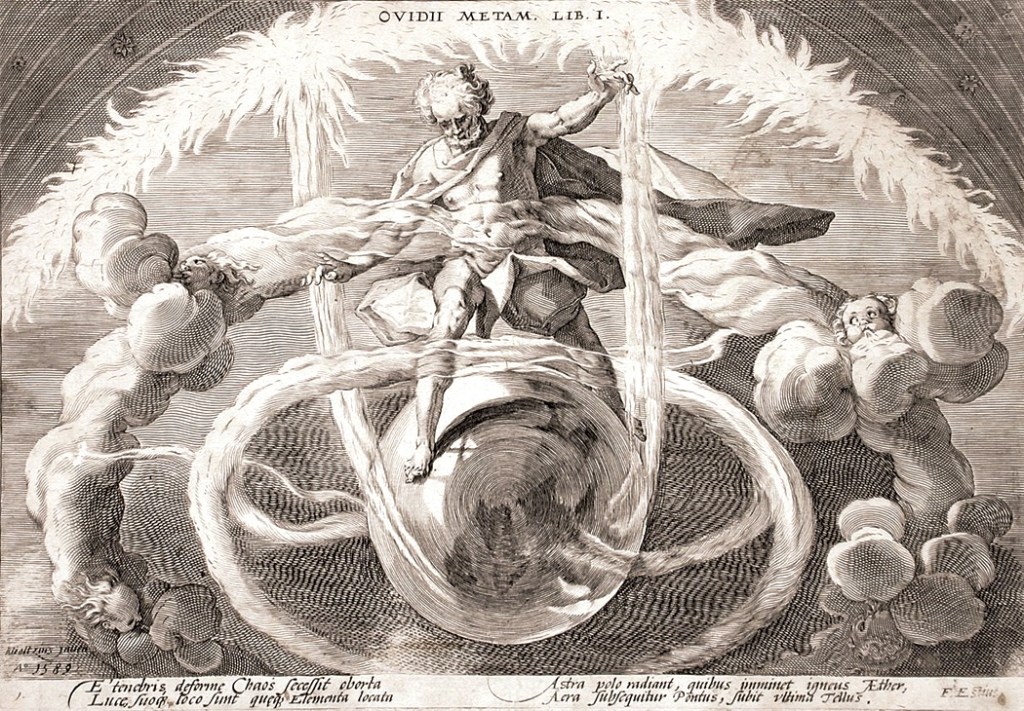
This image is from the workshop of Hendrick Goltzius in 1589. Karel van Mander who wrote a very influential book which included a translation of the Metamorphoses as an appendix to his Schilder-Boeck (Book of Painters, 1604) compared Goltzius to Michelangelo. This image was captured at richardnilsen.com.
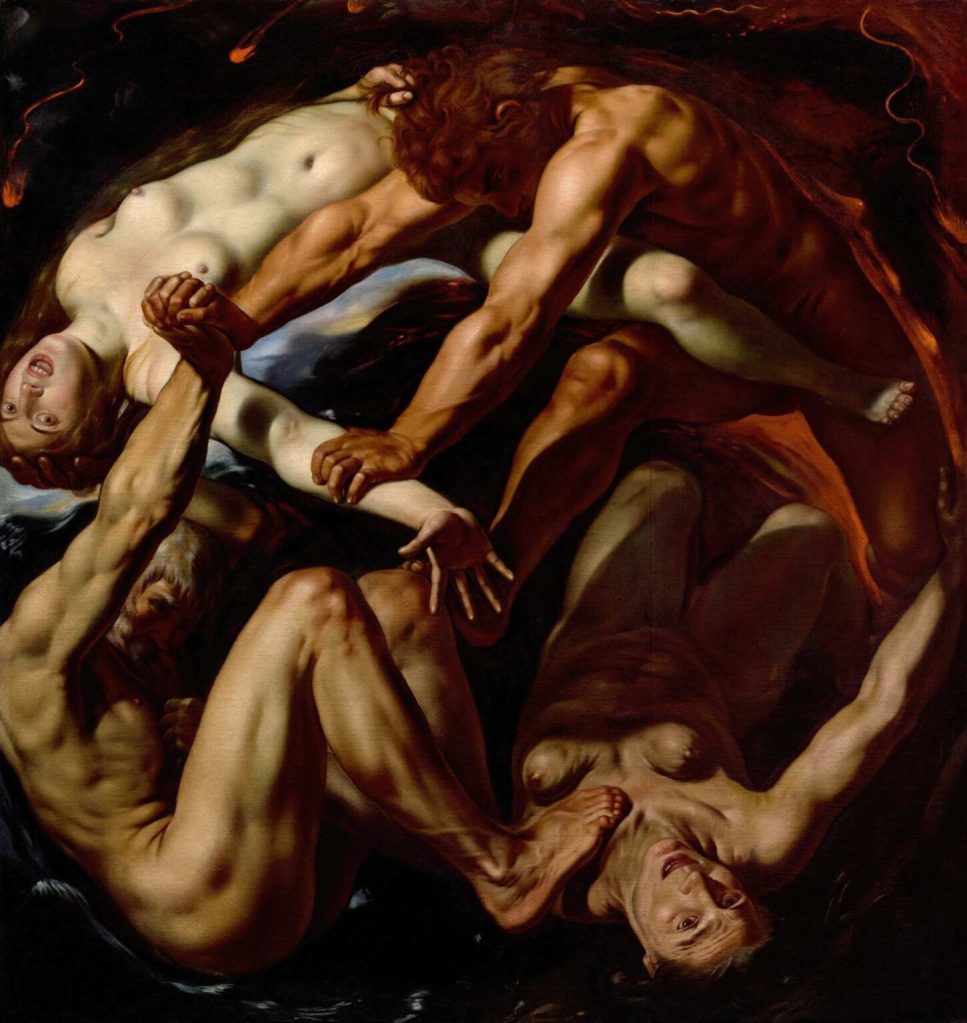
Chaos or The Battle of the Four Elements by Louis Finson was painted in 1611. The struggle between the elements is palpable. This one is in a private collection, but was part of an exhibition that ended in May of 2026 in Amsterdam. So close…
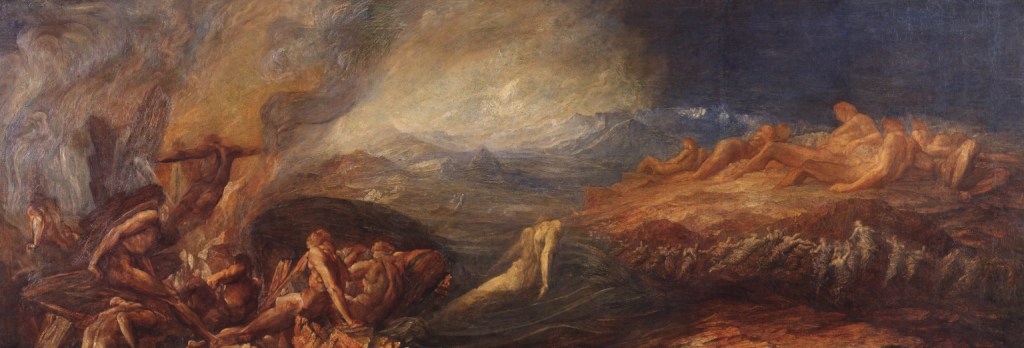
This is the oil painting Chaos by George Frederic Watts. It was painted c. 1875-1882. It measures 1067 x 3048 mm or about 3 1/2 feet tall and 10 feet across. We’ll need to go to the Tate Museum in London to see it. Here’s where I found it online: https://www.tate.org.uk/art/research-publications/the-sublime/george-frederic-watts-chaos-r1105605
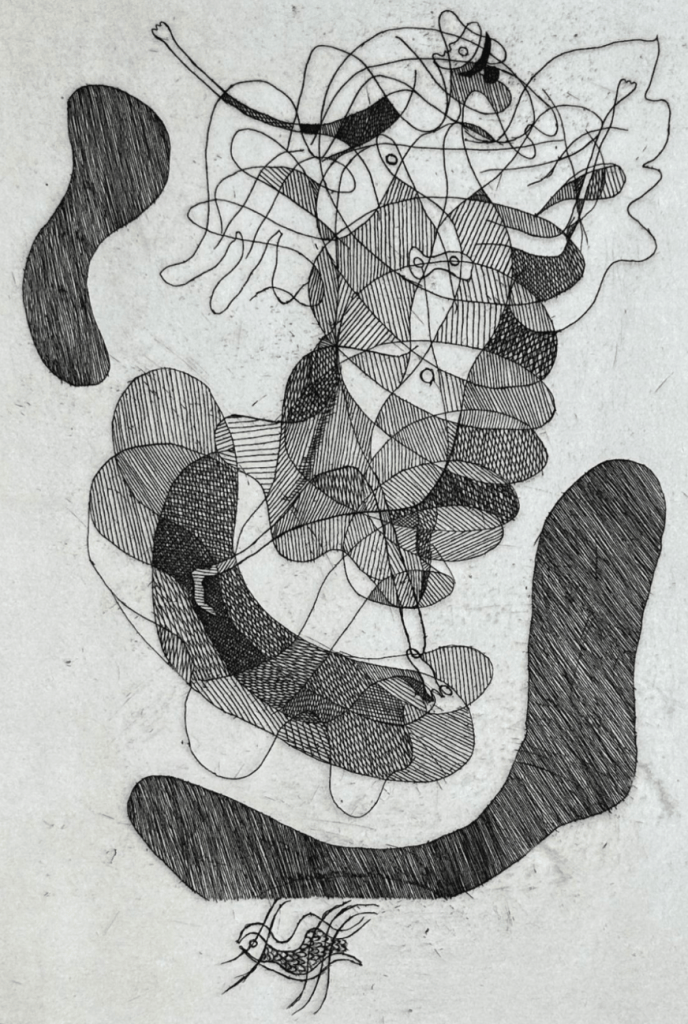
Here is Hesiod’s Theogony: Chaos by Georges Braque (1932). I found it on a poster for a lecture given in 2025 exploring the earliest uses of the term “chaos” which the lecturer suggests was first used by Hesiod, but in a different way than Ovid who much later used the word in his story of creation.
As the promotion of the event explains:
The term ‘chaos’ appears for the first time in world literature in a remarkable passage in Hesiod’s Theogony, but almost certainly it does not have the meaning there that it has in modern languages; and this modern meaning cannot be found attested in any ancient Greek or Latin text before it appears in Ovid’s Metamorphoses.
Braque was a part of the cubist art movement. I would have liked to attend the lecture that used his artwork as promotion. Here is the link to the event: https://www.colorado.edu/classics/2025/04/04/lecture-invention-chaos-hesiod-ovid
It’s no great leap to think that Ovid had read Hesiod.
THE AGES OF MAN
I’m not drawn to the images associated with the Ages of Man. There are many of them, perhaps the most famous being those by Hendrik van der Borcht the elder, made in the mid 17th century.
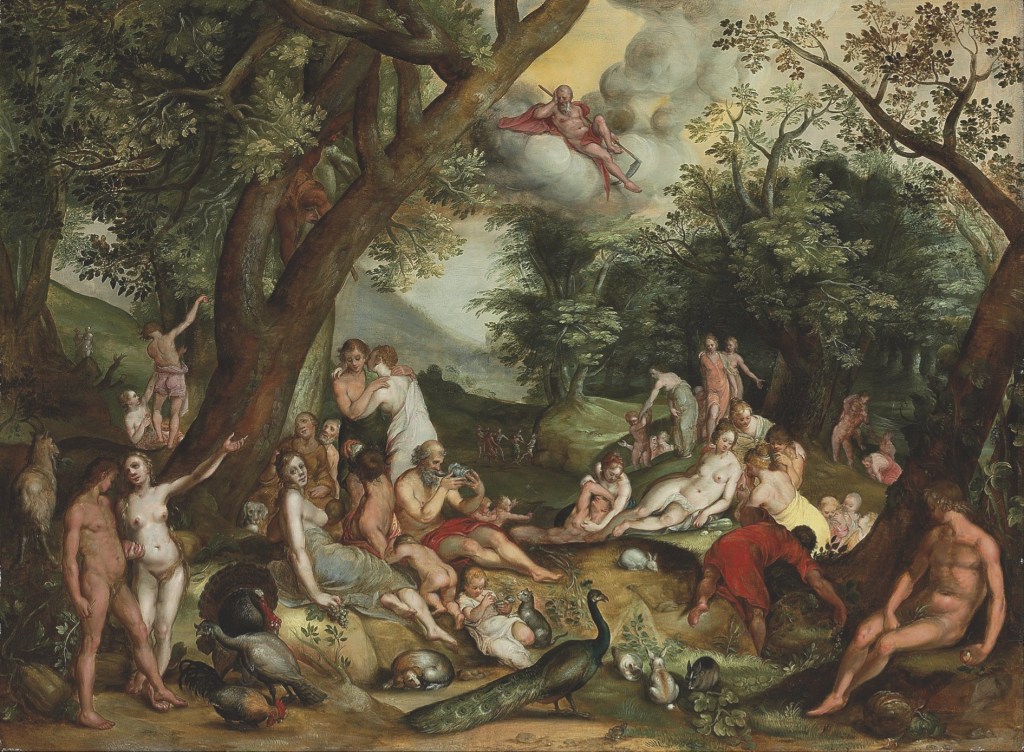
By Attributed to Hendrik van der Borcht the elder – https://www.christies.com/lotfinder/Lot/hendrik-van-der-borcht-a-collection-of-5176038-details.aspx, Public Domain, https://commons.wikimedia.org/w/index.php?curid=81757909
They were of course presented as a collection of four ages, each with their own image. The image above and below are of the Golden Age. This one below by Frans Francken the Younger betrays the era it was created (also coincidentally in the middle of the 17th century), but it still looks like a good time.
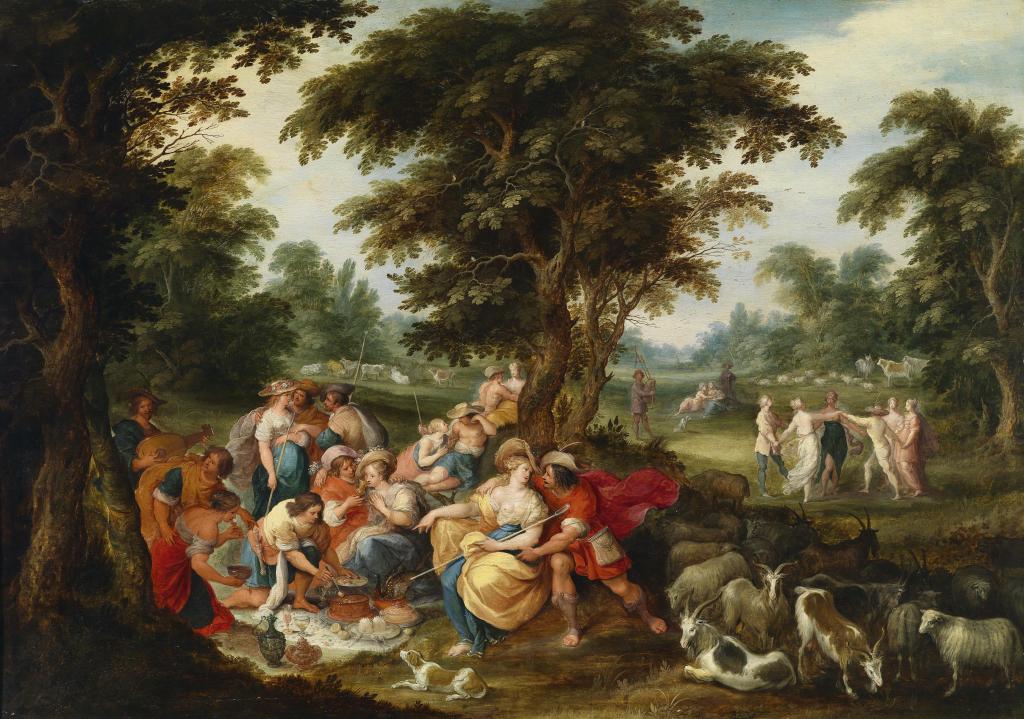
By Frans Francken the Younger / Ambrosius Francken II / Hans Jordaens III / Abraham Govaerts / Alexander Keirincx – Dorotheum, Public Domain, https://commons.wikimedia.org/w/index.php?curid=16084415
I was interested in the description of the Iron Age (or the Age of Steel as Samuel Garth calls it in 1826) where man falls from the Gold, Silver, and even Bronze Age. It sounds horrible. This one detail caught my eye:
The ground -- once shared, like light and air -- was marked
With lines drawn by surveyors in the dirt.
(This from the C. Luke Soucy translation (2023) which may be my favorite.)
The note of the land being shared struck me. We’ve known for millennia that this way of being lacks virtue. Even Garth (1826) translates it thus:
Then landmarks limited to each his right,
For all before was common as the light.
This is followed by the pillaging of the land through extractive means. Indeed, despite the following events, we still seem to be in that age of baser mettle.
THE GIGANTOMACHY
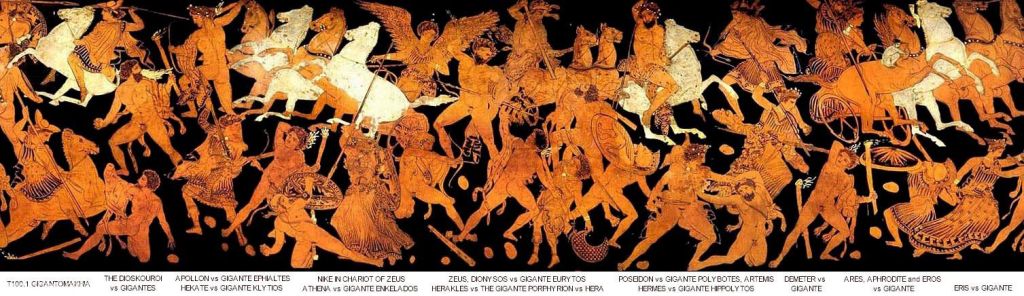
This is a vase made in c. 400-390 B.C.E. attributed to the Suessula Painter and is held by the Louvre in Paris. This montage of many photos of the vase shows many scenes. Obviously better in person. Here’s where I got the image: https://www.theoi.com/Gallery/L20.1.html
The Gigantomachy can be seen as part of the Pergamon Altar in Berlin at the Pergamon Museum. The altar was excavated from on one of the terraces of the acropolis of Pergamon which is in modern day Turkey. A King Eumenes II originally had the altar built in the first half of the second century B.C.E.. The altar was brought to Germany in the late 19th century and into the early 20th century.
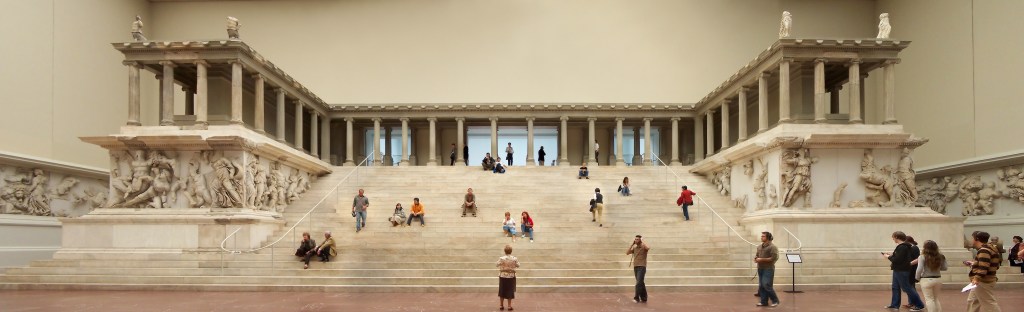
This image was created by Lestat (Jan Mehlich) – Own work, CC BY-SA 3.0, https://commons.wikimedia.org/w/index.php?curid=3099513
The story of the Gigantomachy exemplifies the supremacy of the gods. Mother of the Giants, Gaia encourages her progeny to overthrow the gods, but they are defeated by the gods. One interesting detail is the serpent tails for legs of most representations of the Giants.
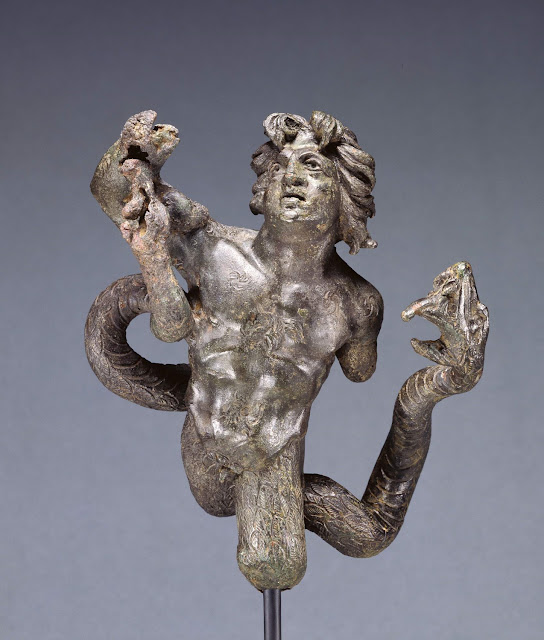
This bronze sculpture of a Snake Legged Giant c. 180-200 is at the Getty Museum in Los Angeles.
This is a striking image of the Fall of the Giants, with Jupiter mounted on Eagle is from the 16th century and can be seen at the British Museum. Jupiter seems so calm as he rides that eagle down to strike down the giants.
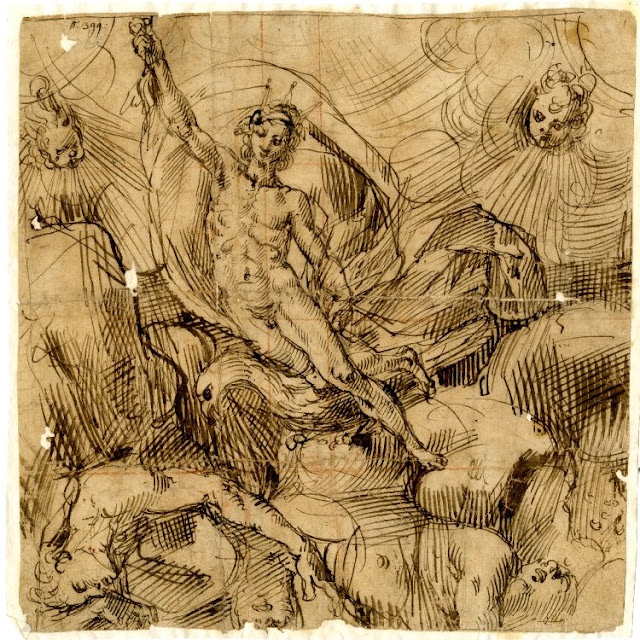
LYCAON
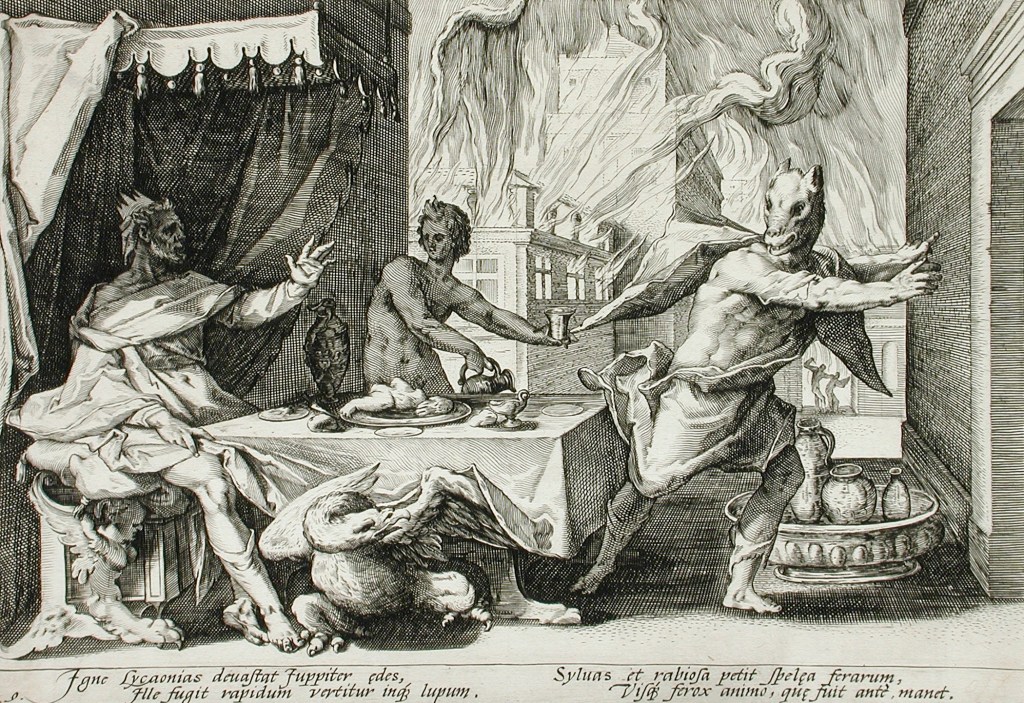
The first werewolf, Lycaon is the center of a gruesome tale of a human challenging the authority of the gods. I find this image of Lycaon’s transformation into werewolf energetic and intriguing. It’s by Hendrik Goltzius from 1589. We’ve seen his work above.
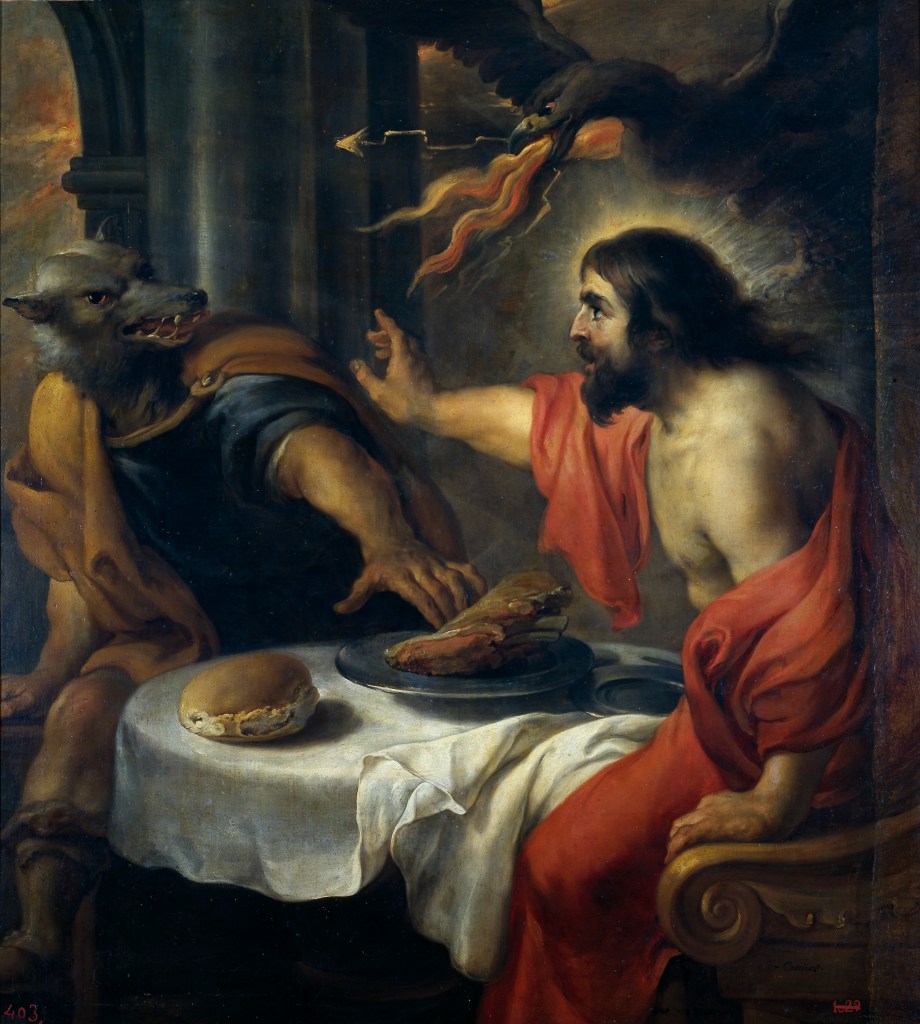
This one by Jan Cossiers after Peter Paul Ruebens is pretty fantastic: Júpiter y Licaón (c. 1637)
This engraving from the early 1500s by Virgil Solis hits it just right:
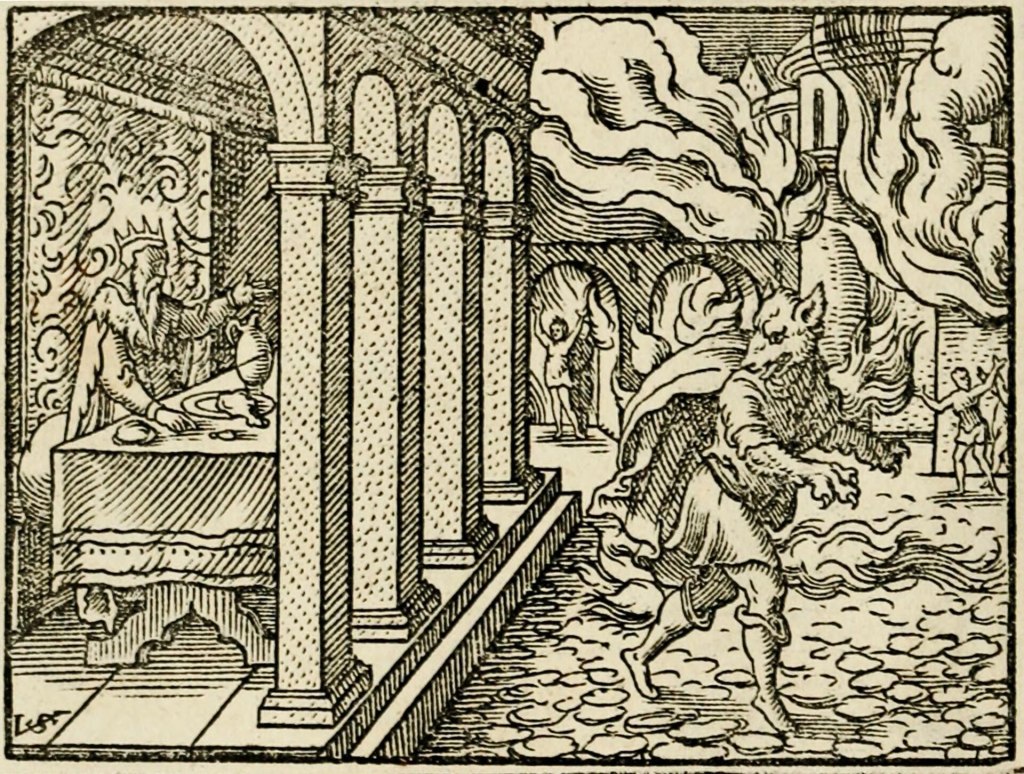
I’m tickled by this engraving from the mid 1600s by Crispijn van de Passe which shows Jove in the turban with the feather standing straight up at the front.
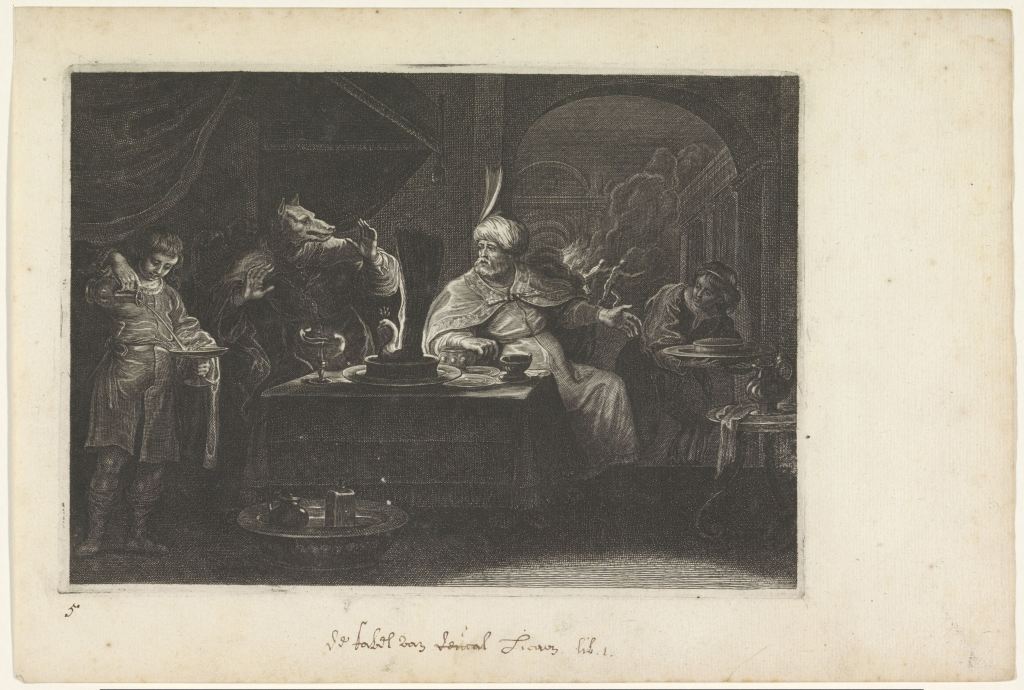
All these show the fire in the background, of course.
THE FLOOD
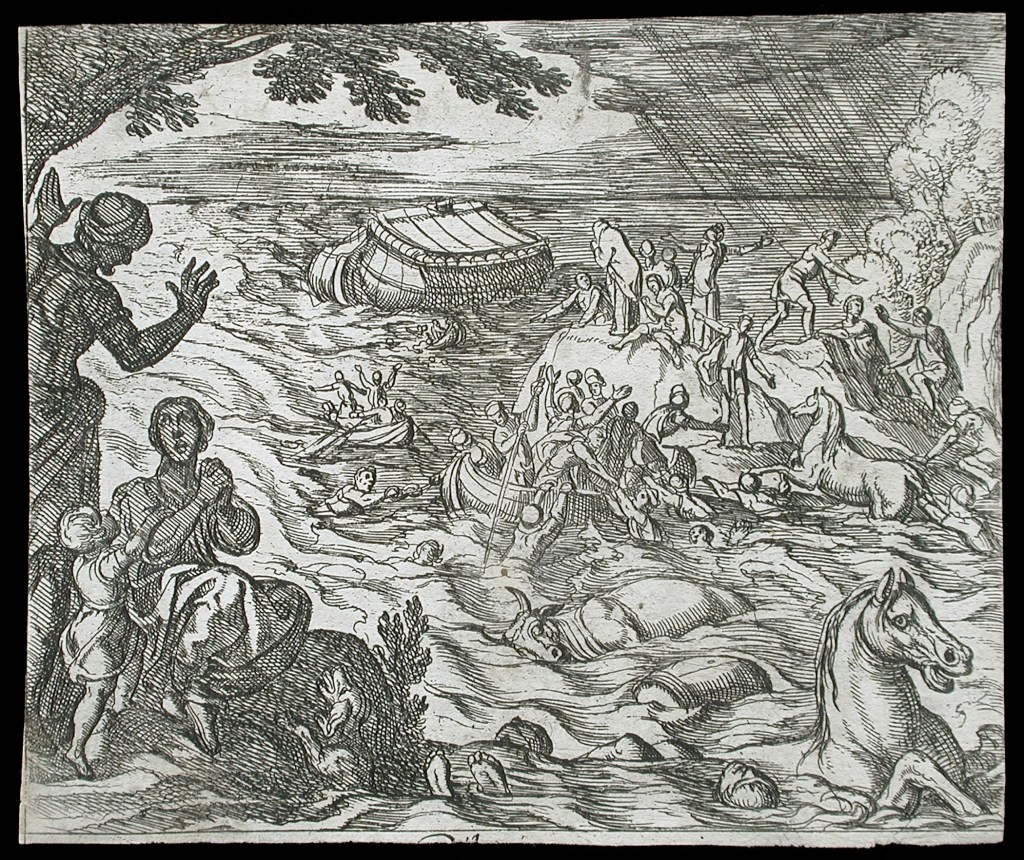
Wilhelm Janson 1601
DEUCALION AND PYRRHA
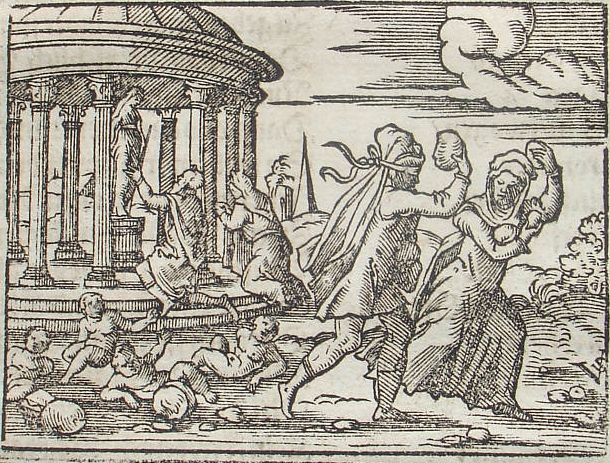
Virgil Solis (early 1500s)
THE PYTHON
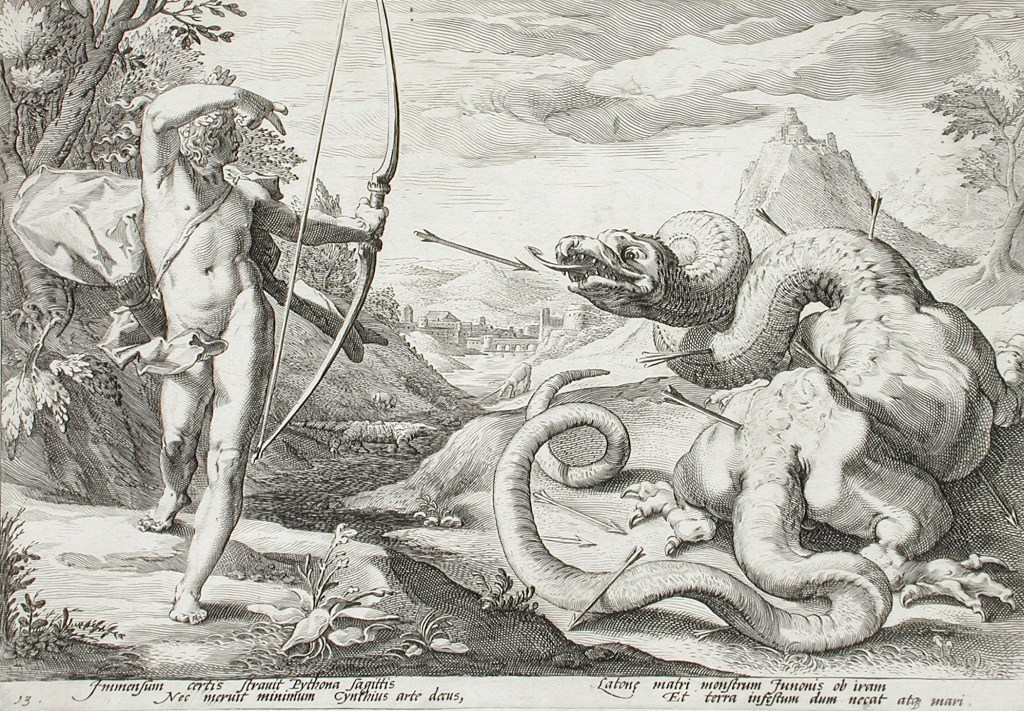
Hendrick Goltzius in 1589
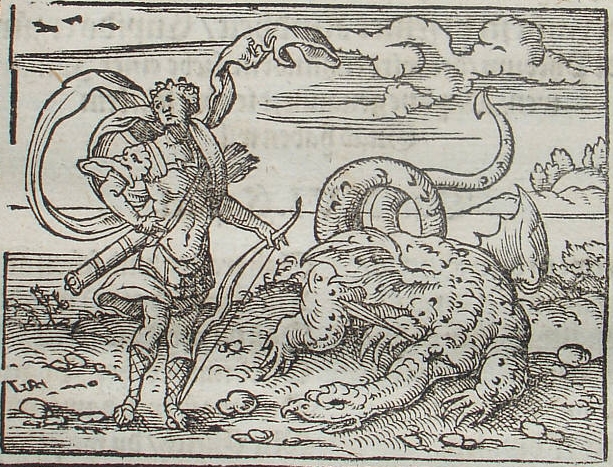
Virgil Solis (early 1500s)
APPOLLO ATTEMPTS TO RAPE DAPHNE
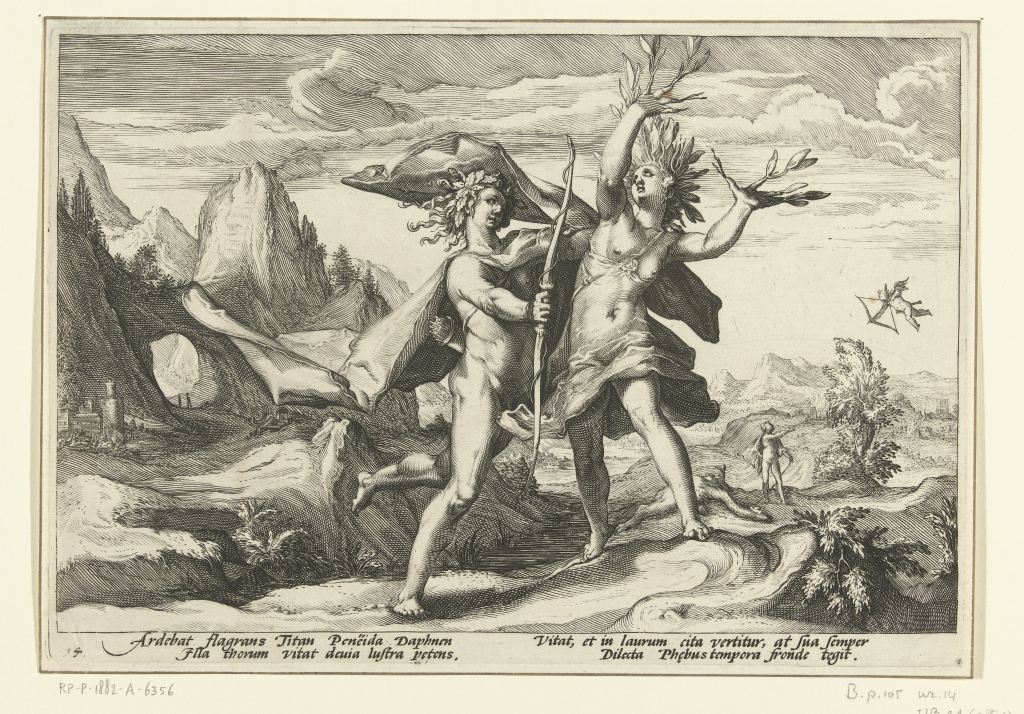
Hendrick Goltzius 1589
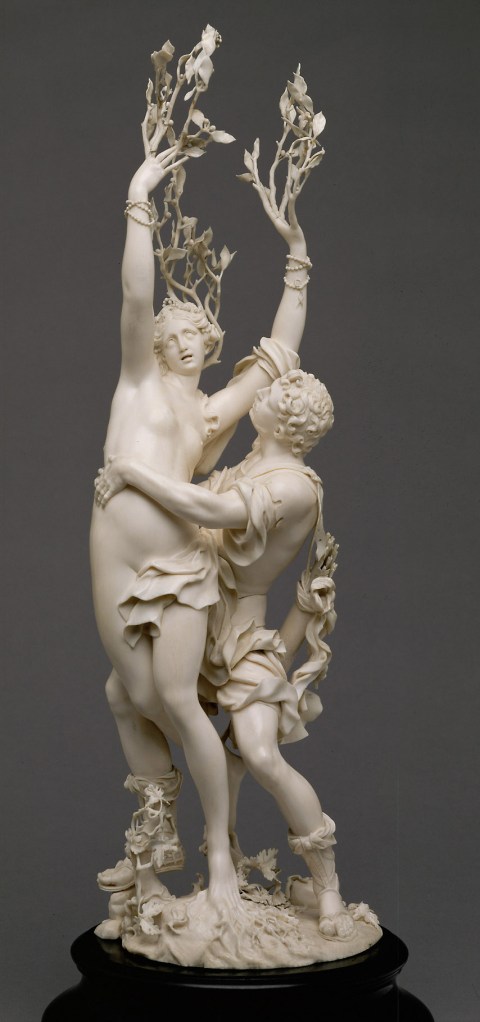
Apollo and Daphne by Jakob Auer 1688 is in the Kunsthistorisches Museum in Vienna
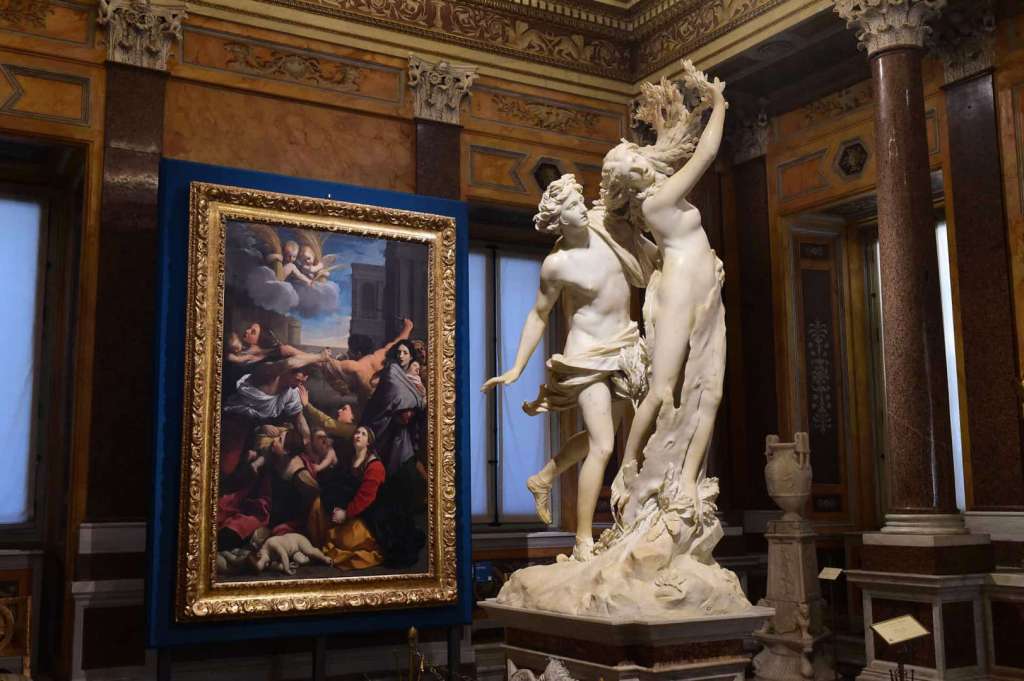
Apollo and Daphne by Gian Lorenzo Benini (1622-1625) in the Galleria Borgese in Rome
JOVE RAPES AND TRANSFORMS IO
SYRINX AND PAN
MERCURY KILLS ARGUS
IO REGAINS HER FORM
PHAETHON
We will discuss this story more in the next book. From the first book we see Ovid’s playfulness and mastery of poetic form in his deliberate decision to end a book in the middle of a story. Cheeky. I can’t wait to go see this image in person.
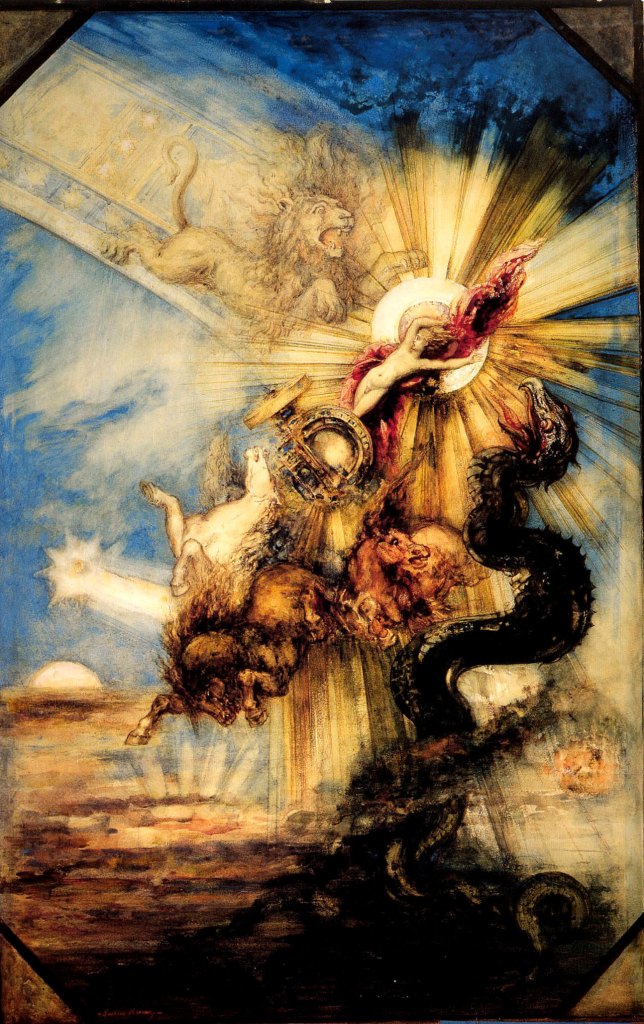
This image is the painting Phaeton made in 1878 by Gustav Moreau. It can be found in the Louvre in Paris, France.
 Solomon Everta