Every town has this issue. In fact, Anywhere that people live has this issue. What do we do with our feces? How we determine that (and how we deal with all of our waste) determines who we are.
For those (un)fortunate enough to join me on Mondays for the Agenda Review Group (ARG!) this will be review as I have shared my opinions there regularly when this comes up — and it has come up much recently.
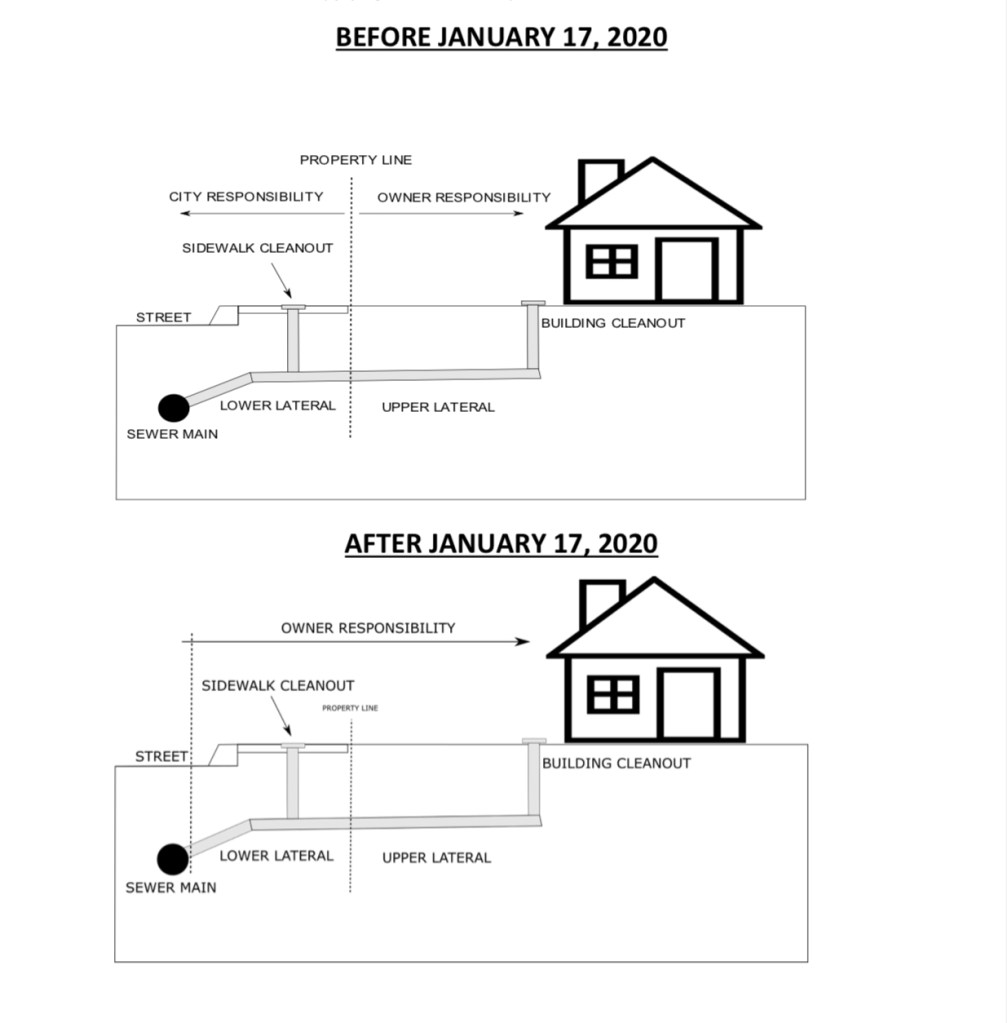
There is a pipe from every modern house that transports human waste water to a main line, usually in the middle of the public street. This pipe from the house to the main line is called a sewer lateral. These have been made from clay, asbestos, metal, and other materials. Many of these sewer laterals are so old that they are failing. Replacing them is a big, expensive job.
As a city we have decided that they should be replaced and even made laws requiring them to be replaced when it is discovered that they need replacing. More recently, local laws have been made requiring the inspection (and replacement if needed) upon sale of any property in the city. As part of this realization that all this work will need to be done is the matter of responsibility for the length of sewer lateral from the property line to the main line. The responsibility has been with the city for upkeep of the sewer lateral beneath publicly owned land, but this has been shifted completely to the connected property owner. This simplifies things in that the property owner (as an individual) is now responsible for the entire length of the sewer lateral.
People who sell houses don’t like most of this as it adds cost to selling a house which will dissuade people from buying, which will reduce the amount of customers they have. I generally agree with that adding a cost onto the process of buying a home is counter to the goal of increasing ownership of homes by their tenants.
But how to fix this? I have some ideas.
The City of Eureka is monkeying around with methods for limiting the cost of particularly expensive sewer lateral replacements. This “fee in lieu” of replacement simply socializes the actual cost of replacement (above the fee amount) among the rest of the tax payers. That is, folks who own property with a significant defect are getting the rest of us to chip in to help pay for making that defect go away. If we are going to socialize part of the cost, why not do it in a way that is more fair?
Instead of making a limited fee in lieu structure, let’s just all take responsibility for this problem and begin a program of replacing all of the sewer laterals in the city. Basically, let’s make the fee in lieu system be for everyone, so that the cost is truly socialized, rather than just socializing the cost among the taxpayers to benefit a small subset of sewer lateral owners?
This is my suggestion:
Add a fee to sewer bills for replacement of all sewer laterals. Property owners can avoid this fee up to the amount that their sewer later replacement cost them if they have already done the work. After that amount has been surpassed, they are responsible for contributing like everyone else. The fee is assessed proportional to the property value. Those with more expensive properties pay in more to the pool.
The total amount of fees collected will be equal to the amount of costs incurred in replacing sewer laterals citywide in the previous year. At the end of this process, a smaller fee will be collected so that a fund is created from which any future needed sewer lateral replacements can be accomplished.
It’s just math.
Currently, there is a monetary incentive for folks with more expensive houses (and folks with more complicated sewer laterals, which are not always the same people) to support a program that helps pay for their property’s defect at the expense of the rest of the tax and fee paying public in a regressive way.
Here’s what gets missed in these discussions: Fee for service models place a burden on the individual and frees the government from acting in the interest of the people collectively. Thereby, the individual can claim their freedom if they are wealthy enough to purchase it.
When we instead work toward collective liberation, we can find ways to more equitably share the wealth of the earth and the systems of efficiency we have created. Those who have figured out how to get much more value out of the system by taking advantage of others (through extracting surplus labor value or leveraging a monopoly in a certain industry and price gouging poor customers for example) can pay a fair share of their wealth into solving the challenges that face us whether that is climate change or something like replacing sewer lateral lines.
In the system created tonight where costs of some landowners are paid for by the entirety of the community is a continuation of the Great Wealth Transfer. Our country has been seeing implementation of this transfer over the last several decades as a response to the success of post depression era programs that shared in the prosperity of postwar America. Ironically, it is those who have benefitted most from these affordable quality public schools and ability to enter the property owning class who are now financializing the economy and ditching collective liberation, buying into the “individual makes his own reality” attitude that leaves collective liberation behind.
All this is made evident in the sewer lateral line debate. The wealthy or those with access or allegiance to the wealthy will garner support from the working poor who may think the only way out of this expensive service is to make everyone pay for their situation.
Instead, we can support each other by having everyone pay for everyone’s sewer lateral line in a way that those who can afford more pay more and those who can pay less will pay less for something that we all want to be done for the health of our community.
It’s all our neighbors supporting all our neighbors. We can’t have that. That would be socialism.
 Solomon Everta